Gerry Gillespie
  • Home
  • The Waste Between Our Ears
  • Latest News & Resources
  • AKT KIX Dehydrator
  • Recycling with a focus on food
  • About
  • City to Soil
  • Events Recycling
  • Problem, Opportunity & Solution
  • Contact
  • Testimonials
Picture

The soil is our mother, everything we are, everything we ever will be is predicated on what we eat.
 

Yet in many instances, urban communities have lost their connection to the soil as their food producer.


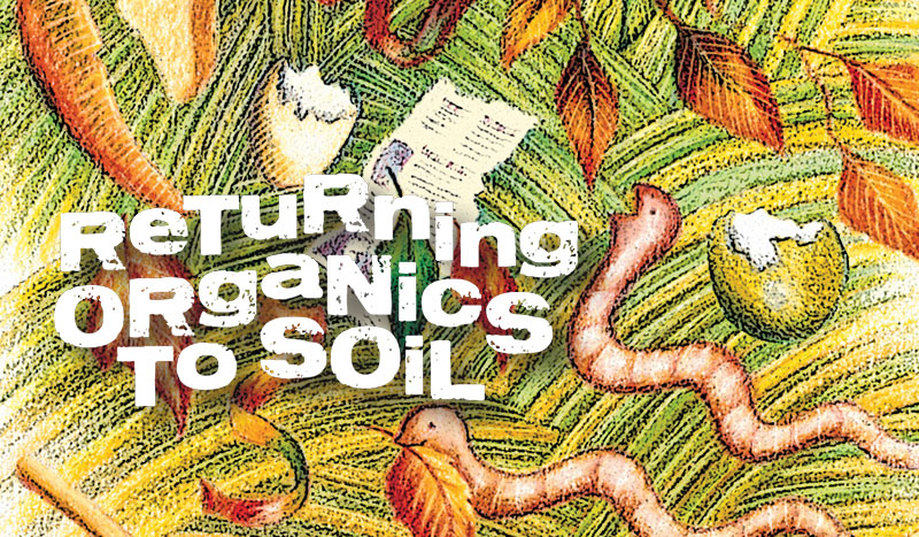
​Returning Organics to Soil (ROTS) is all about addressing that loss of connection and how we might rebuild it through the use of our organic waste as high quality inputs into soils.
 
ROTS
 is about connecting people with like values and exchanging information under open sourced and Creative Commons processes where a genuine free exchange can occur to help build common knowledge on solutions.

 Compost project in Samoa - Opportunity for Food Plant Solutions

An organics composting programme in Samoa is clearly showing that with the correct design community composting can take a leading role in healthy food production. Local groups using their own food waste and garden waste can create a first step to underpin community garden food production and community health. This compost process will fit readily into any of the Food Plant Solutions programs around the world.
 
The model designed and implemented by Canberra based Waste Recycling Environment Network (WREN), is intended as a model for use in smaller communities where size, scale and population determine the placement of the process. The SPICE compost process in use has no odour, requires no turning and takes only 10 weeks to produce a high-quality compost product.
 
The funding for this project came through the Recycle Organics project designed by the Centre for Clean Air Policy with funding from the Department of Environment and Climate Change, Canada (ECCC).
 
This community site has its own compost shed where nine 1.2 cubic metre boxes, lined in fine woven cane mats, sit side by side under protection from wind and rain. The box designed originally by Maye Bruce in the 1920s was used in the Dig for Victory Program in World War II Britian to grow food for a population under siege by Germany.
 
The boxes sit side by side and are based around the number of participants. They are intended to be individually filled on a weekly basis. The locally made SPICE compost inoculant enables the boxes to safely reach well beyond the pasteurisation temperature of 55 deg Celsius, without fear of spontaneous combustion. In many instances the temperature can be held for over a week, to produce a weed free, quality compost to be used later in the production of local food for the participating families.
 
The compost process is entirely scalable from several to hundreds of homes.  Initially 20 households have registered to bring their food waste to the existing site in covered buckets. Households are given a spray bottle of the compost inoculant to control any potential odours. 
 
Whenever supplies of food waste become too large for the given number of boxes the compost process can be easily expanded to a more traditional windrow system. This can be supplemented with grass and vine trimmings from local homes and public lands. The process is intended to expand to up to 100 homes at this site while seeking out other locations including the establishment of a larger site on public land at the local landfill
 
At the heart of this Samoa compost project is a potential training program which could be spread throughout the Pacific and around the world on the basis that the SPICE compost process can collect and compost without odour or turning and at any scale. As such it has enormous potential to build on the Food Plant Solutions work where more than 35,000 edible indigenous plants have been identified in many communities around the world. As such it provides not only the basis of a networkable Zero Waste program but is also a living model of a full circular economy. Its potential impact on Non-Communicable Diseases such as diabetes and other community health issues is also significant.


  • Home
  • The Waste Between Our Ears
  • Latest News & Resources
  • AKT KIX Dehydrator
  • Recycling with a focus on food
  • About
  • City to Soil
  • Events Recycling
  • Problem, Opportunity & Solution
  • Contact
  • Testimonials