Worm farming on a large or small scale
Island Biologicals is an Australian, family owned and operated business on Oxley Island, on the mid north coast of NSW. It is run by Lee Fieldhouse and his partner Kirsty Hughes, with daughters Juno and Coralie, and dogs Mango and Dash. They run a large compost and worm system, with the liquid biostimulant Biocast as their signature product. More information can be found on their website:
If you'd like to improve your garden soil and put your kitchen scraps to good use, here are some basic instructions for making your own small-scale worm farm

| worm_farm_instructions-designs.pdf |
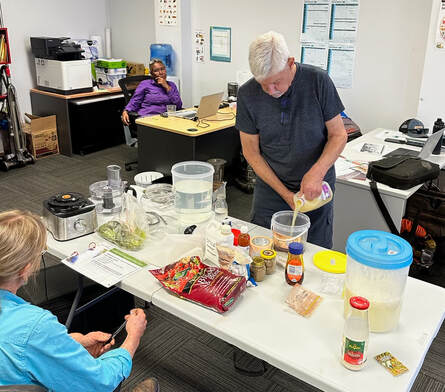
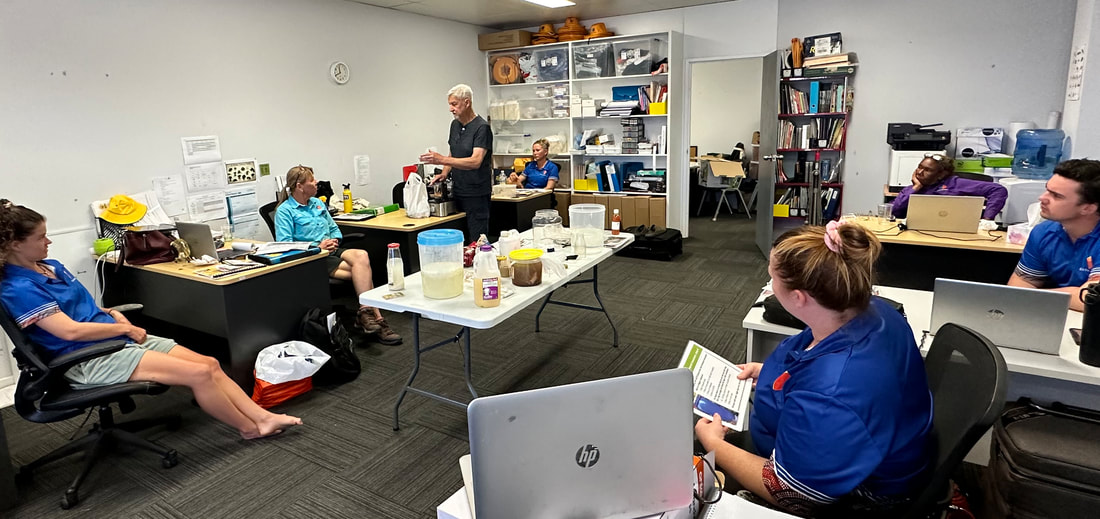
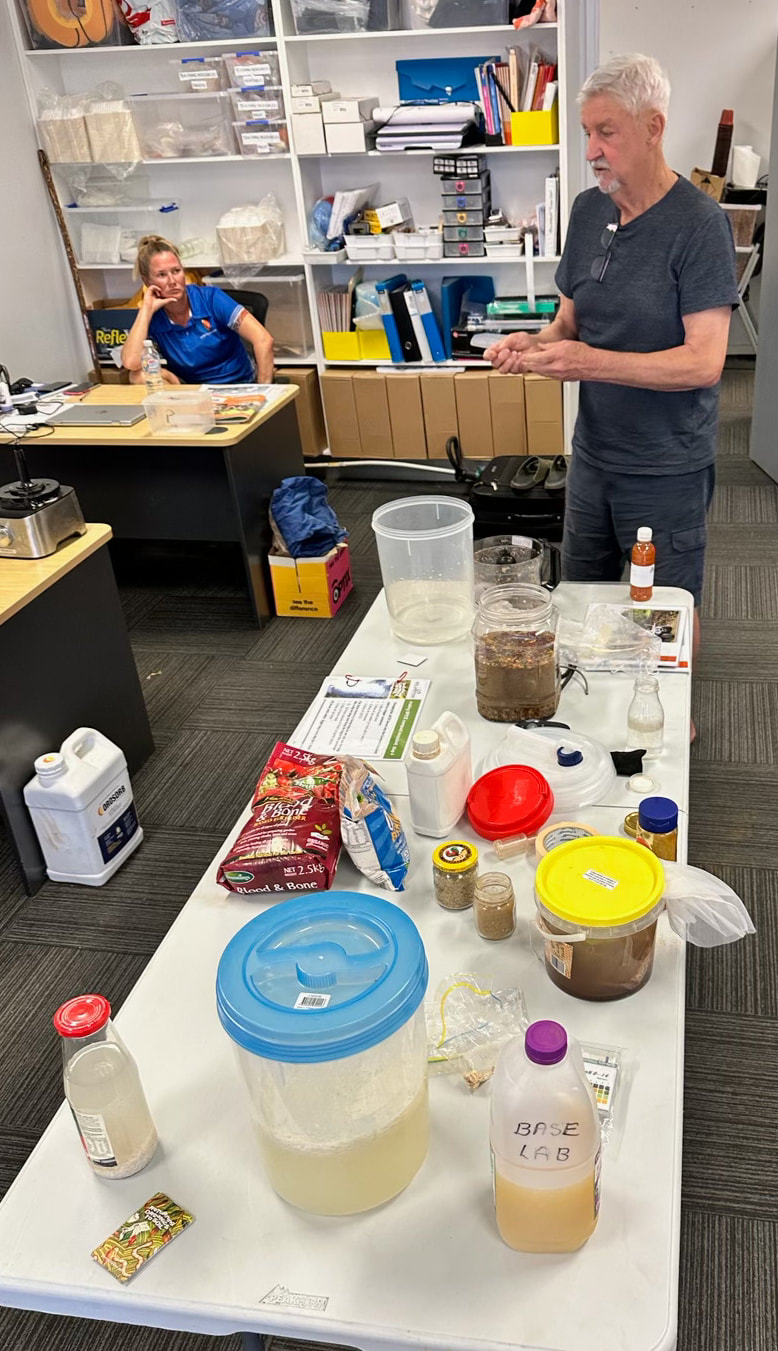
Presentation to educators and trainers in the EON Foundation in their office at Katherine in the Northern Territory
The EON Foundation provides communities with the tools to grow, cook and eat fresh, healthy produce.
|
|
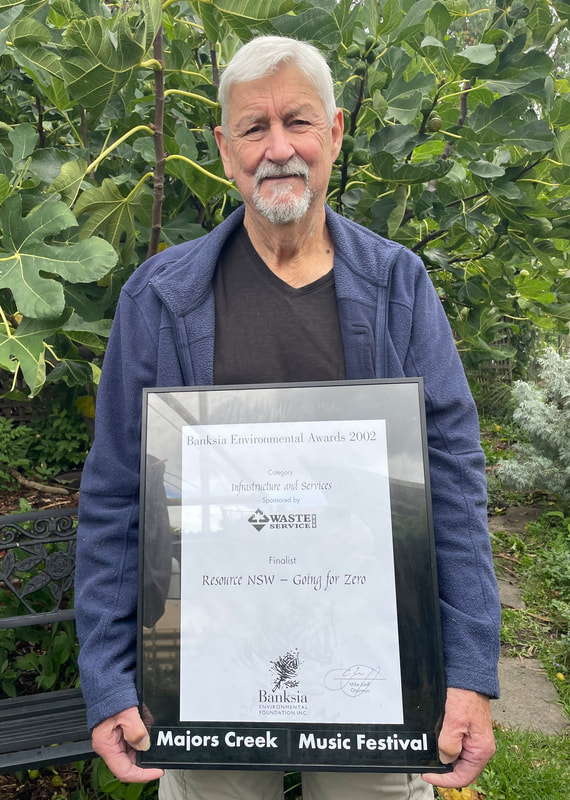
International Zero Waste Day 30th March
The UN is to be congratulated for announcing March 30th as International Zero Waste Day.
The world is finally catching up with Majors Creek’s successful Zero Waste Festival held in 2001!
The world is finally catching up with Majors Creek’s successful Zero Waste Festival held in 2001!
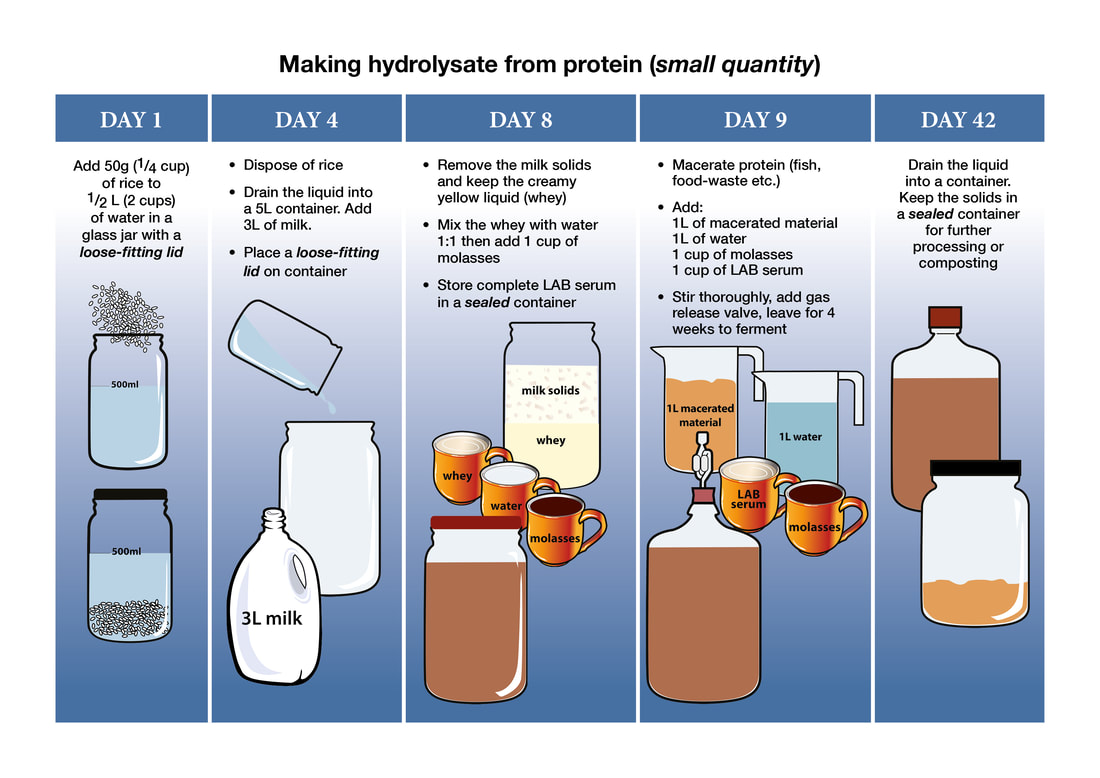
Gerry's instructions for making a small quantity of hydrolysate
This diagram shows how to make hydrolysate from protein on a small scale.
Latest podcast with Ryan Dickinson: Emergency response and preparedness
Book recommendations
Gerry recently participated in the 20122Acres USA Earth Day book recommendations to be found here:
https://www.acresusa.com/acres-usa-announcements/earth-day-2022-book-recommendations/
He also contributed to this book on soil practices in Africa:
https://afsafrica.org/book-launch-healthy-soil-for-healthy-communities/
Soils for Life podcast
Gerry contributed to this excellent podcast on composting methods:
https://soilsforlife.org.au/podcast/
https://soilsforlife.org.au/podcast/
Positive Alternatives to Incineration and Landfill
|
| ||
Carbon:Nitrogen Ratios
|
| ||
Local ABC News story on composting of feral animals
This story aired on Canberra's ABC 7pm News on Saturday 10th July, featuring local farmer Martin Royds and Gerry's method of composting feral animals:
https://mobile.abc.net.au/news/2021-07-11/potential-for-feral-goats-to-become-organic-fertiliser/100279376?fbclid=IwAR0uq2TyN9lLxGzpDA4GXIraCL8qEROFbmBi6M0HSlJysCah2Tz6ax5as20
https://mobile.abc.net.au/news/2021-07-11/potential-for-feral-goats-to-become-organic-fertiliser/100279376?fbclid=IwAR0uq2TyN9lLxGzpDA4GXIraCL8qEROFbmBi6M0HSlJysCah2Tz6ax5as20
Sacred Lab Podcast now available
Gerry was recently interviewed by Ryan Dickinson from Sacred Lab Podcasts in Victoria, Australia. Listen to it here: anchor.fm/sacred-lab/episodes/Gerry-Gillespie--Author-of-The-Waste-Between-Our-Ears-evv9pr
Earth Day 2021
Acres USA includes a quote from Gerry in their celebration of Earth Day:
www.acresusa.com/acres-usa-announcements/earth-day-2021/
www.acresusa.com/acres-usa-announcements/earth-day-2021/
Update on 'The Waste Between Our Ears'
Gerry's book 'The Waste Between Our Ears' has now been printed in Australia and was launched via Zoom on October 28th 2020. Here's the link to the YouTube video of the launch:
https://www.youtube.com/watch?v=FhsoBtlyVmg
https://www.youtube.com/watch?v=FhsoBtlyVmg
|
This pdf is an excerpt from the book printed recently in Acres USA magazine:
|
| ||
Alliance Bank Do Good Awards
Do Good Award winners announced!
Congratulations to the winners of the 2019 Do Good Awards...
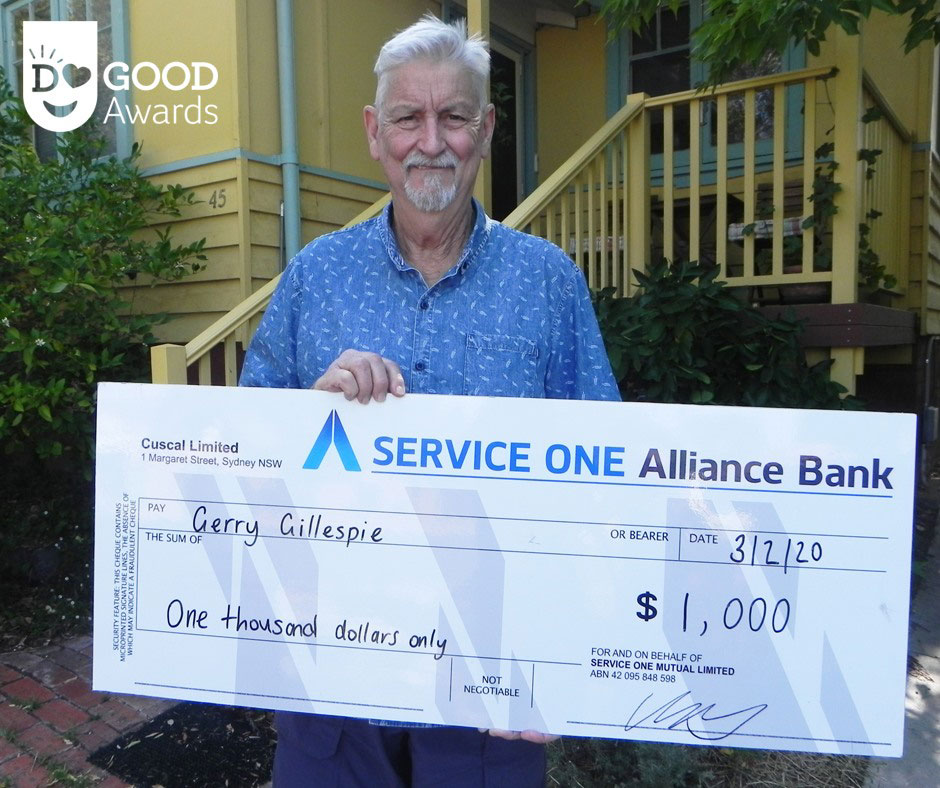
Do Good Community Award - Gerry Gillespie is an eco-warrior! He is a pioneer of the organics resource industry and has dedicated his life to environmentally responsible land management.
Gerry has positively impacted many lives by sharing his extensive knowledge on organic resource recovery and its reuse in soil, as well as broader environmental issues. Well regarded here and internationally, Gerry has influenced and educated governments, industry bodies, communities and NGOs. Recently he authored a discussion paper on the benefits of a national recycling organic waste program.
Gerry has spent much of his life educating people about soil health and soil regeneration. He is passionate about working with organisations to prevent food organics from ending up in landfill and instead, teaches how to use these valuable nutrients to boost soil health. This change will enable us to create a sustainable future for ourselves and the planet.
Do Good Award winners announced!
Congratulations to the winners of the 2019 Do Good Awards...
Do Good Community Award - Gerry Gillespie is an eco-warrior! He is a pioneer of the organics resource industry and has dedicated his life to environmentally responsible land management.
Gerry has positively impacted many lives by sharing his extensive knowledge on organic resource recovery and its reuse in soil, as well as broader environmental issues. Well regarded here and internationally, Gerry has influenced and educated governments, industry bodies, communities and NGOs. Recently he authored a discussion paper on the benefits of a national recycling organic waste program.
Gerry has spent much of his life educating people about soil health and soil regeneration. He is passionate about working with organisations to prevent food organics from ending up in landfill and instead, teaches how to use these valuable nutrients to boost soil health. This change will enable us to create a sustainable future for ourselves and the planet.
These videos were produced in June/July 2019 when Gerry visited the US and Canada to present a number of workshops with Dr Christine Jones.
|
|
|
|
| bioferments_biostimulants_and_biofertilisers_-_making_them_on-farm_fact_sheet_final_metric_march_2019.pdf |
| spice_compost_metric_version.pdf |
| bioferments_biostimulants_and_biofertilizers_-_pdf_2nd_may_2019.pdf |
| spice_compost_usa_version_1st_may_2019.pdf |
| 5_steps_for_making_inoculant__metric_.pdf |
| 5_steps_for_making_inoculant__imperial_.pdf |
| handout_pages_usa.pdf |
| presentation_for_usa_and_canada_2019.pdf |
| incineration_still_makes_no_sense_-_nz.pdf |
| feraliser_april_2017.pdf |
| kangaroo_presentation_oct_2018.pdf |
Conversations on issues of sustainability, recorded by Gerry and Geoff Pryor in 2018